Scrub typhus can initially resemble other causes of fever, making early recognition difficult. Common symptoms include high fever, chills, headache, muscle pain and rash. Some patients develop an eschar, a dark, scab-like area at the site of the mite bite. Swollen lymph nodes and changes in mental status can also occur.
Not every patient develops an eschar, so its absence does not rule out the infection.
Why Can Scrub Typhus Become Serious?
Without appropriate treatment, severe scrub typhus can affect multiple organs. Complications can include respiratory distress, kidney or liver failure, encephalitis and other forms of organ dysfunction. The CDC notes that severe disease can be fatal.
How Is It Treated?
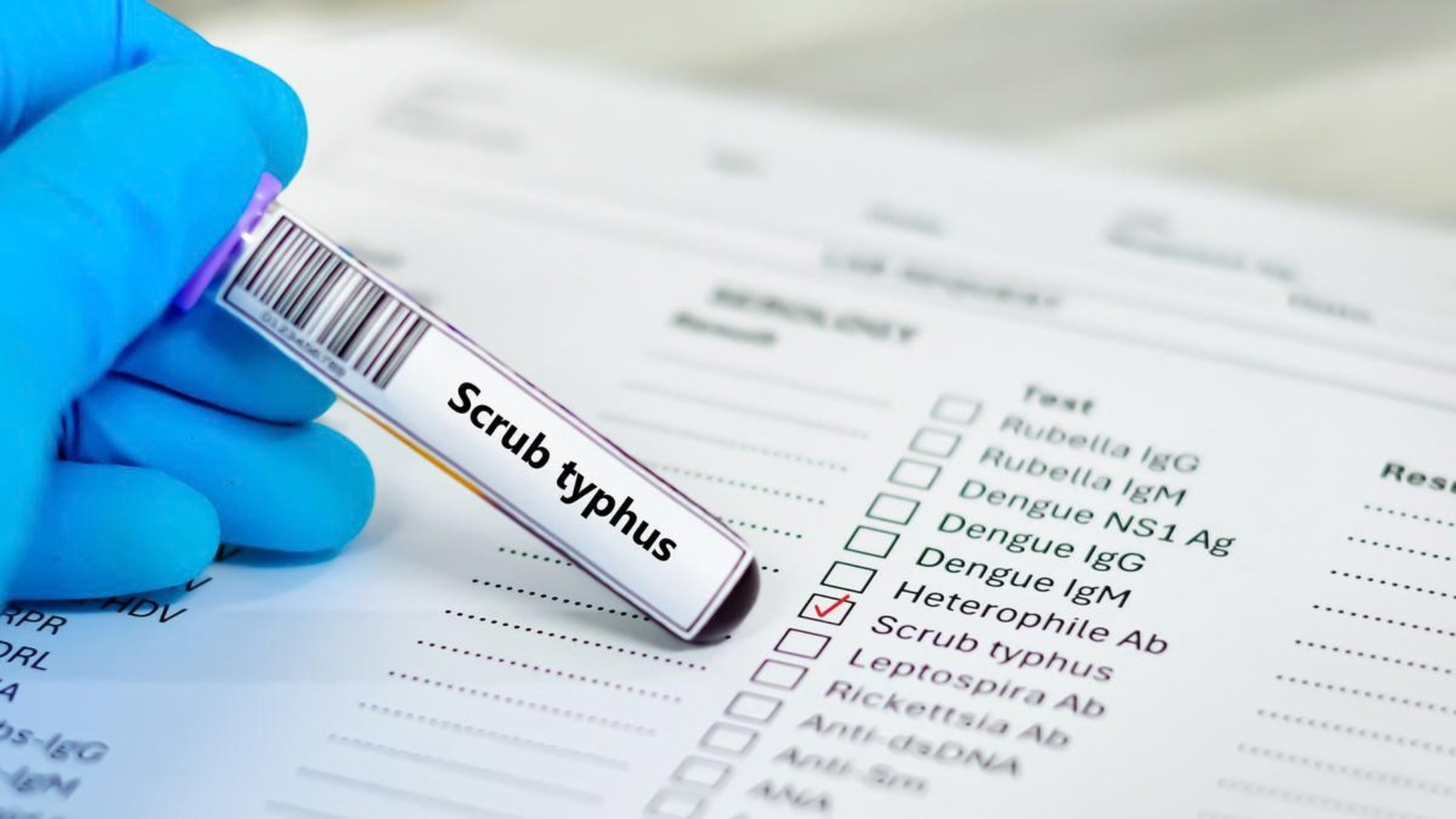
Scrub typhus is treatable with antibiotics. Doxycycline is the treatment of choice, and early treatment is associated with better recovery. Doctors may use blood tests to help confirm the infection, although treatment can sometimes begin before laboratory results are available when clinical suspicion is high.
The recent death of a 20-year-old Anna University student in Chennai has again drawn attention to the infection. Health authorities subsequently screened students on the campus as part of fever surveillance.
Health
What Is Scrub Typhus? Symptoms, Causes and Treatment
Scrub typhus is a bacterial infection spread by infected chiggers. Know its symptoms, transmission, risks and why early treatment matters.