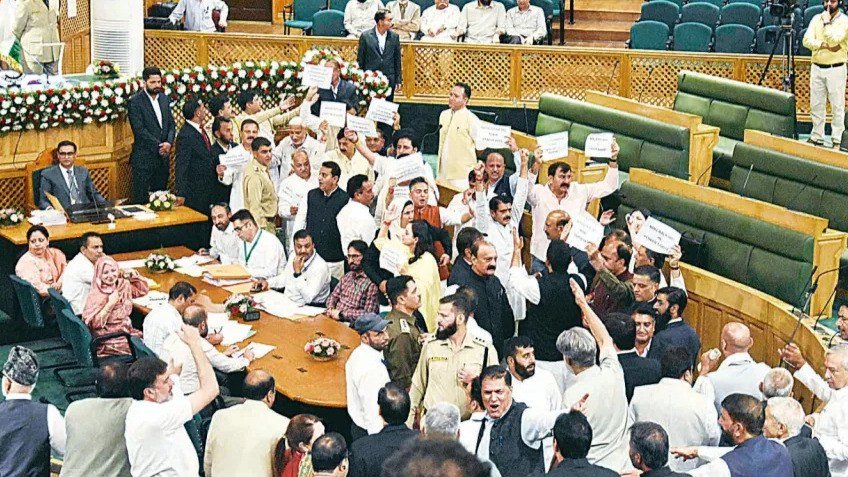
The Jammu and Kashmir Legislative Assembly has reignited the debate over the region’s constitutional status, as Chief Minister Omar Abdullah moved a resolution seeking the immediate restoration of statehood.
During the Autumn Session on September 28, several amendments were proposed, including references to Articles 370 and 35A, which granted special status to Jammu and Kashmir before their abrogation on August 5, 2019. Though these amendments were later withdrawn, they brought renewed focus on the constitutional provisions that have historically shaped J&K’s relationship with the Union of India.
Article 370, once a defining feature of J&K’s autonomy, restricted Parliament’s legislative powers to defence, foreign affairs, and communications, while allowing the state to have its own constitution. The abrogation of Article 370 and 35A in 2019 integrated J&K more closely with the rest of India but also sparked political and social debates that continue today.
The Assembly’s resolution reflects growing political pressure to restore statehood, a demand echoed by multiple parties and civil society groups. The issue remains central to J&K’s evolving identity, balancing aspirations for autonomy with integration into India’s constitutional framework.