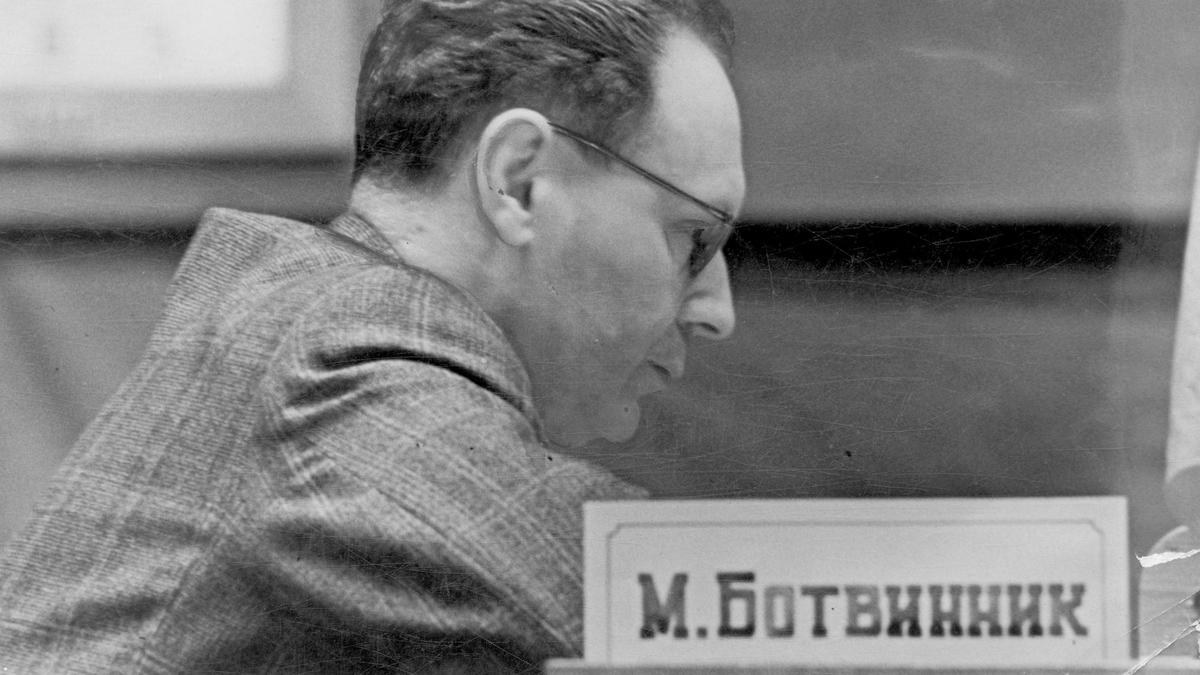
The death of Alexander Alekhine in 1946 left the world of chess without a reigning world champion and created the need for a new method of deciding the title. Until then, the established tradition was for a challenger to compete against the incumbent champion. With no champion in place, the chess world had to find an alternative.

A tournament featuring five leading players was organised in 1948 to determine the sixth World Chess Champion. The competition was held at two venues, The Hague in the Netherlands and Moscow in the Soviet Union.
The participants were Mikhail Botvinnik, Vasily Smyslov and Paul Keres from the Soviet Union, Samuel Reshevsky, a Polish-born American player, and former world champion Max Euwe of the Netherlands.
The tournament followed a demanding format in which every participant played against each of the other four competitors five times. This round-robin structure was designed to identify the strongest player across a series of encounters rather than through a single championship match.
The 1948 tournament marked an important turning point in the history of international chess. It replaced the previous challenger-versus-champion arrangement with a tournament-based method for selecting a world champion when the title was vacant.
The presence of three Soviet players among the five competitors also reflected the growing strength of chess in the Soviet Union. The event became a significant chapter in the country's emergence as a dominant force in world chess.



0 comments
No comments yet. Yours would be the first.