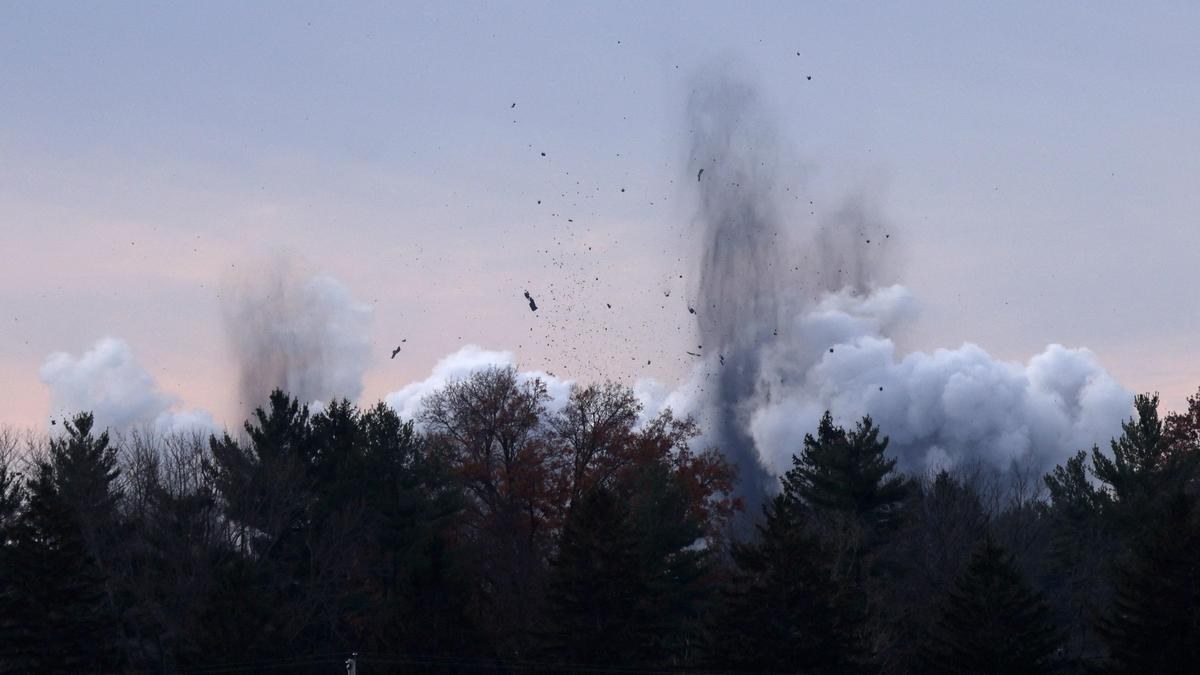
The U.S. Army has declared a controlled detonation of an ageing stockpile of lead azide at the Iowa Army Ammunition Plant in Middletown a success, saying the operation eliminated the risk of an accidental explosion.

The detonation was carried out on Wednesday, November 25, destroying nearly five tonnes of unstable explosive material stored in 68 deteriorating barrels. Residents closest to the ammunition depot were evacuated as a precaution, while people in surrounding areas were advised to remain indoors.
The U.S. Environmental Protection Agency (EPA) said its real-time air monitors detected no airborne lead in the region approximately one hour after the blast. The agency had collected more than 1,200 samples of air, soil, dust and water before the operation and said further environmental monitoring would continue.
Army officials said the operation used containment measures, including barriers, water, foam and misting equipment, to limit the spread of lead particles. They reported no secondary explosions or damage to infrastructure at or around the installation.
The stockpile had become increasingly unstable after inspections found severe deterioration and crystallisation in the containers. Officials said moving or chemically treating the material posed serious risks, making controlled detonation the preferred option.
Despite the initial monitoring results, some residents expressed concern about the possible environmental impact. Reuters also reported that an independent environmental health expert cautioned that air-monitoring readings alone could not establish how much lead may have settled on nearby land. Further testing of air, soil and water is therefore important.
The operation followed days of public concern and legal disputes over the disposal plan. The supplied report does not include the final results of the post-detonation soil and water testing.
Editorial Disclosure-This report is based on information published by Reuters and official updates from the U.S. Army and the U.S. Environmental Protection Agency. Environmental monitoring results are attributed to the relevant authorities.





0 comments
No comments yet. Yours would be the first.