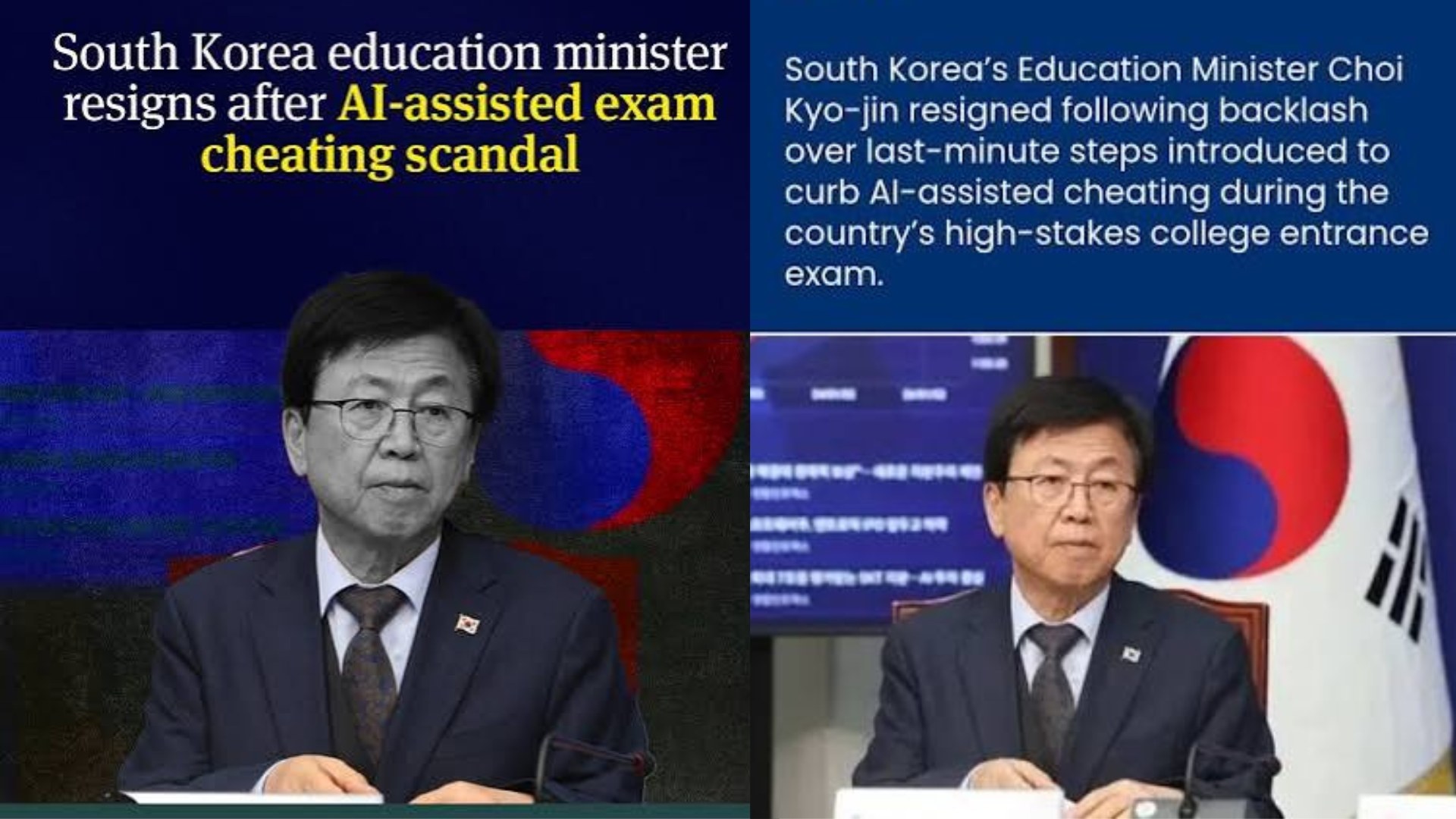
SEOUL: South Korea's Education Minister Choi Kyo-jin resigned on November 22 after facing criticism over confusion caused by last-minute measures to prevent artificial intelligence-assisted cheating in the country's high-stakes college entrance examination.

President Lee Jae Myung accepted the resignation within an hour of its announcement. Choi said the changes introduced shortly before the examination had caused inconvenience to students and the public, acknowledging that the authorities had failed to prepare adequately in advance.
The controversy centred on the 2027 College Scholastic Ability Test (CSAT), commonly known as Suneung, which was held on November 19. The government introduced additional security measures after concerns grew about candidates using hidden cameras, smartphones and artificial intelligence to cheat in examinations.
The last-minute restrictions included allowing candidates to carry only pencils into examination rooms, covering clothing buttons with stickers to prevent the use of concealed cameras, and sending emergency mobile alerts to identify candidates who had not surrendered their phones.
The Education Ministry reported 111 suspected cases involving electronic devices during the examination. However, the reported cases did not establish that every device was used for cheating.
Why Did the Education Minister Resign?
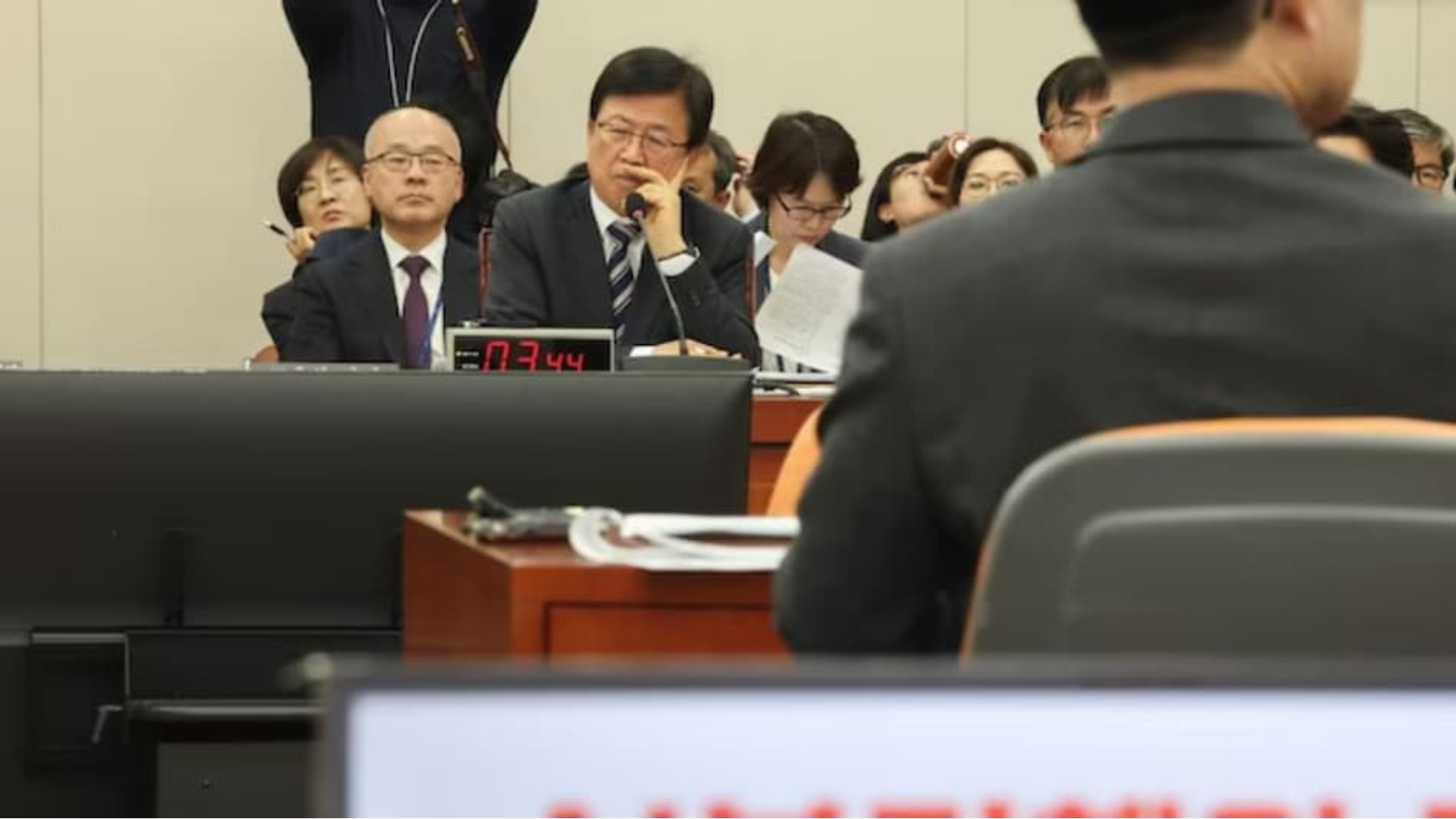
Choi faced criticism over the timing and implementation of the new anti-cheating measures. Students and teachers raised concerns that the repeated changes had created confusion and increased anxiety just before an already demanding examination.
The minister accepted responsibility, saying that the administration should have prepared more effectively. President Lee subsequently directed the government to review examination management and related regulations.
India's Examination Accountability Debate
The development has also attracted attention in India after an Instagram post by Akash Banerjee highlighted the contrast between the resignation in South Korea and public responses to examination controversies in India.
The post questioned whether protests and demands for accountability following examination irregularities in India lead to meaningful institutional consequences. Its caption drew attention to the recurring public frustration surrounding allegations of paper leaks and examination security.
The comparison has opened up a wider discussion about how education authorities respond when examination integrity is questioned. It also raises questions about transparency, responsibility and the steps institutions take to restore students' confidence.
However, the two situations involve different circumstances. South Korea's minister resigned following criticism of the government's handling of anti-cheating measures, while the Instagram post draws a broader comparison with India's paper-leak concerns.
A Larger Question About Trust in Examinations
For students, competitive examinations are often tied to years of preparation and future academic opportunities. Questions about cheating, paper leaks or poorly implemented security measures can therefore affect more than the credibility of a single examination.
South Korea's ministerial resignation has brought the issue of administrative accountability into focus. The online discussion in India reflects a similar demand for examination systems that are transparent, secure and responsive when problems arise.




0 comments
No comments yet. Yours would be the first.