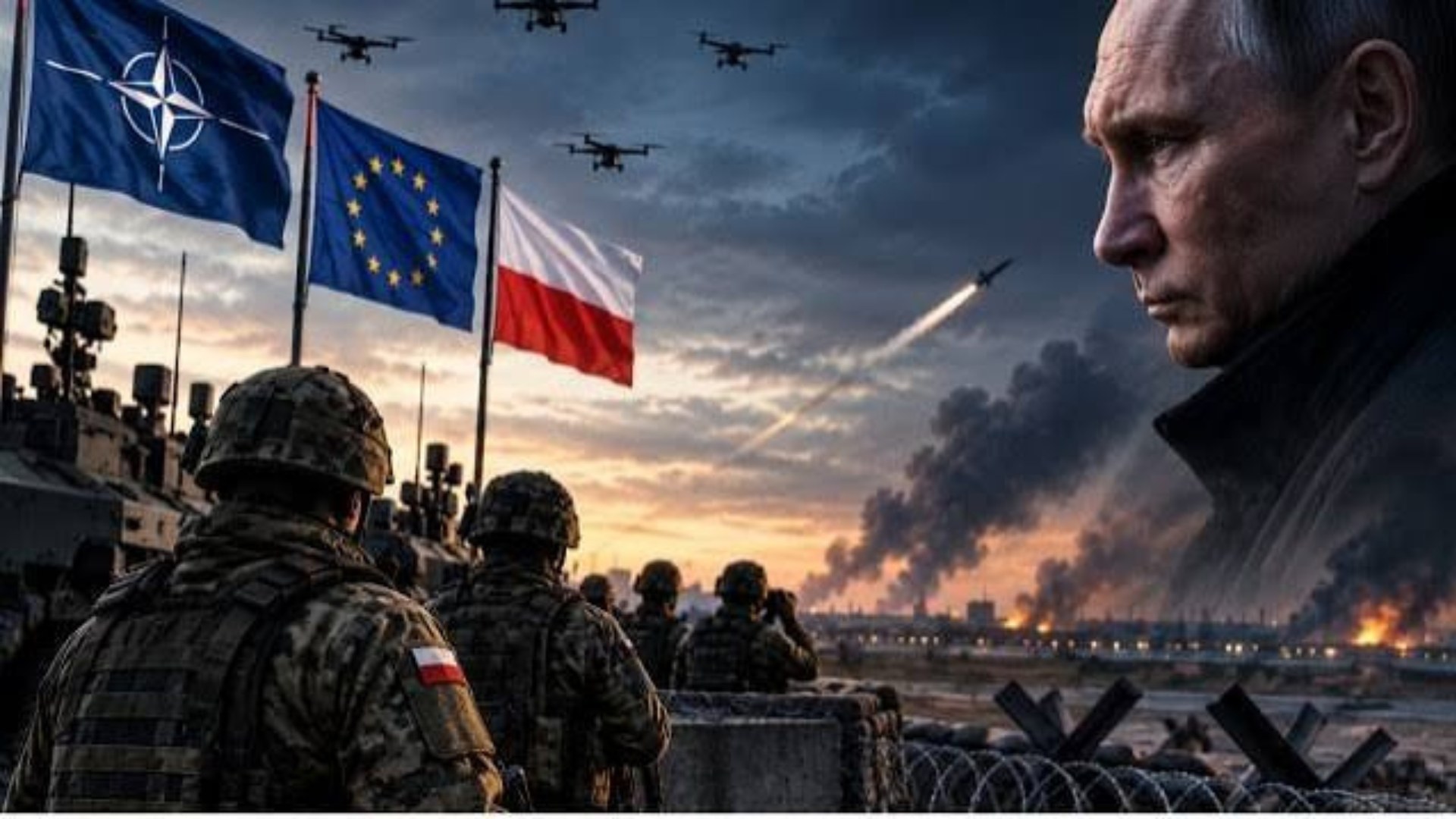
The Russia-Ukraine war is creating growing security concerns across Europe, with recent incidents raising the possibility of a direct confrontation between Russia and NATO. While neither side has declared an intention to enter a wider war, military activity near alliance territory and increasingly strong political warnings have made the situation more sensitive.

Poland's proposal raises the stakes
Poland has asked NATO to consider intercepting Russian missiles and drones while they are still flying over Ukrainian territory. The proposal was reportedly discussed at a meeting of NATO ambassadors in Brussels on November 23.
Warsaw argues that destroying projectiles before they reach NATO airspace could help protect allied countries. However, such an operation would take NATO beyond its current approach of defending member-state territory and could invite Russian retaliation. No alliance decision to adopt the proposal has been announced.
Incidents near NATO territory
Recent developments have added to the concerns. Russian missiles reportedly landed in Poland, while a drone briefly entered Polish airspace. Other incidents involving Russian-linked shipping and military activity around the Baltic region have increased the risk of miscalculation.
NATO has responded by strengthening surveillance. The alliance authorised the deployment of an AWACS early-warning aircraft to Poland to improve monitoring and situational awareness along its eastern flank.
Nuclear warnings intensify concerns
Former Russian president and current Security Council deputy chairman Dmitry Medvedev has warned that certain large-scale conventional attacks could justify a preventive nuclear strike. His remarks have intensified concerns about the nuclear dimension of the conflict.
However, his statements should not be interpreted as evidence that Russia has decided to use nuclear weapons. They represent a warning about possible escalation, rather than confirmation of an imminent strike.
Why a miscalculation matters
The greatest danger may come from an incident neither side intended to escalate. A missile crossing a border, an aircraft being targeted during an interception, or an attack near NATO territory could force governments to respond under intense political and military pressure.
NATO's Article 5 collective-defence clause does not automatically mean that every airspace violation leads to war. It provides for collective action when an armed attack against an ally is established, with each member taking the action it considers necessary.
The situation therefore remains dependent on diplomatic communication, military restraint and decisions by political leaders. A direct NATO-Russia confrontation is not inevitable, but the growing number of flashpoints makes careful crisis management increasingly important.






0 comments
No comments yet. Yours would be the first.