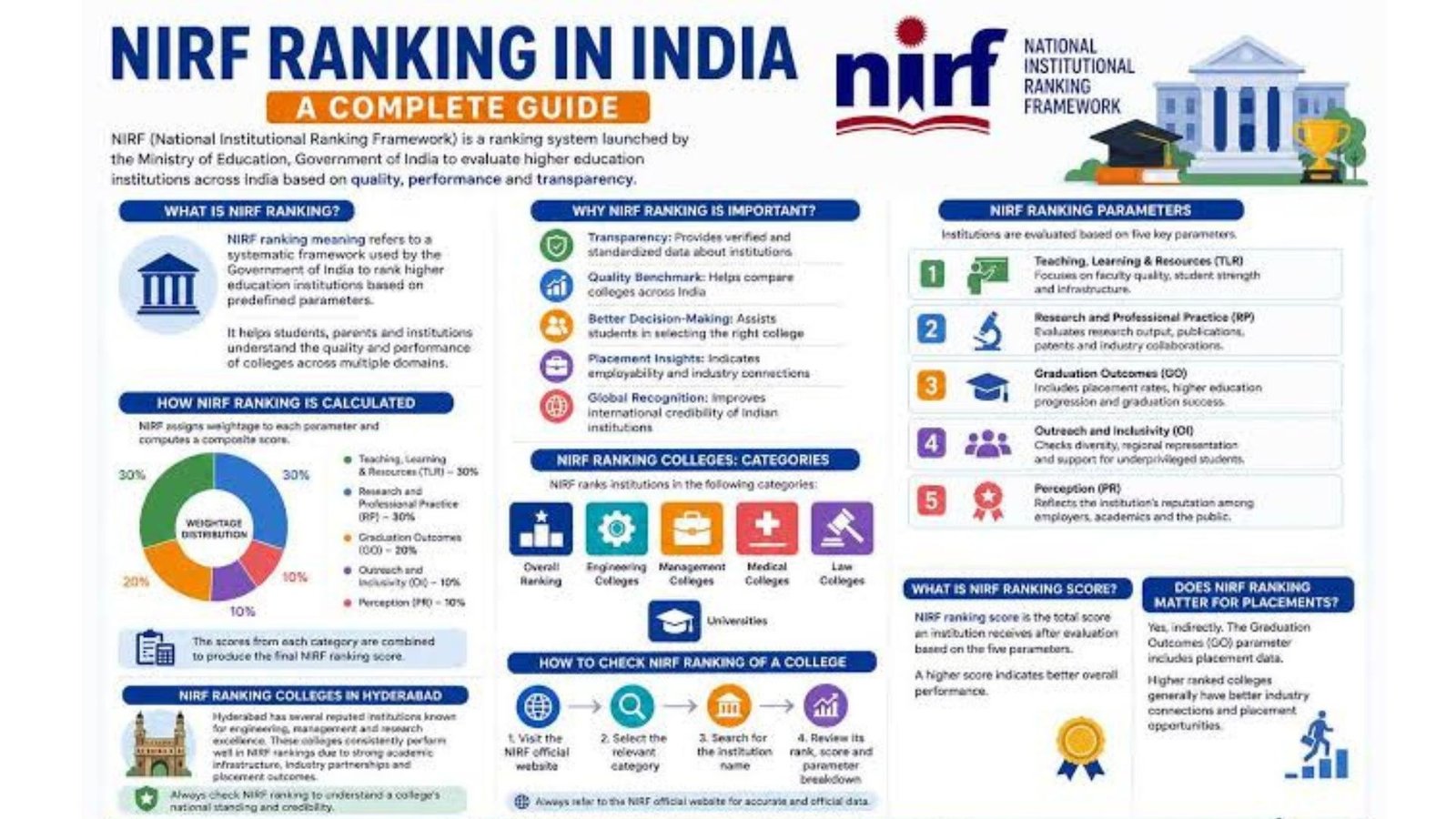
Higher education rankings such as the National Institutional Ranking Framework (NIRF) have become an important reference point for students, parents and institutions. However, questions have been raised about whether rankings accurately capture the quality of education provided by colleges and universities.
The central concern is that ranking systems rely on selected indicators that may not fully reflect teaching quality or the holistic development of students. Academic institutions, meanwhile, may increasingly focus their resources and activities on areas that directly influence their ranking performance.
This can affect how institutions define their priorities. Activities that are easier to measure, report or compare may receive greater attention, while aspects of education that are more difficult to quantify could receive less emphasis.
For students, this creates another challenge. A high institutional ranking does not necessarily provide a complete picture of classroom teaching, academic support, campus experience, mentoring or opportunities for overall development.
The debate does not mean that institutional rankings have no value. Standardised data can provide students with useful information when comparing institutions. However, rankings are only one measure and may need to be considered alongside factors such as faculty quality, curriculum, student outcomes, infrastructure, learning environment and individual academic goals.
With the NIRF 2026 rankings expected to be released soon, the discussion highlights the importance of looking beyond a single ranking position when evaluating higher-education institutions.