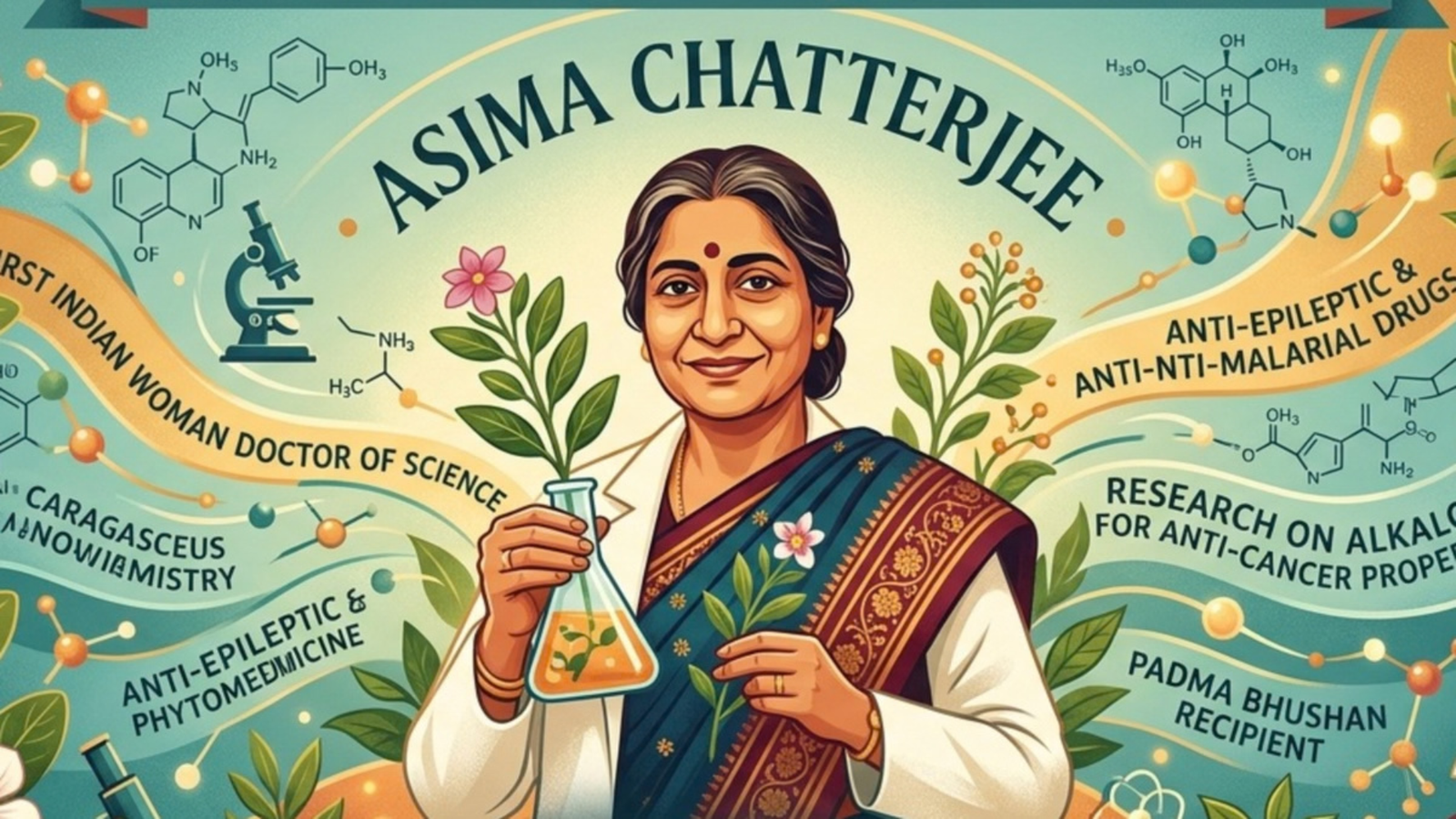
Asima Chatterjee was one of India’s pioneering scientists in organic chemistry and phytochemistry, a field focused on studying chemical compounds derived from plants. Her research contributed to the understanding and development of plant-based medicines, including work related to anti-epileptic and anti-malarial treatments.
Born in 1917, Chatterjee pursued scientific research at a time when opportunities for women in Indian science were limited. Her work on medicinal plants helped establish phytochemistry as an important area of scientific research in India.
Chatterjee’s research focused on identifying and studying active compounds found in plants and exploring their potential medicinal applications. Her work contributed to broader efforts to document the therapeutic properties of plants found across the Indian subcontinent.
In 1961, she became the first woman to receive the Shanti Swarup Bhatnagar Prize in Chemical Sciences, one of India’s major scientific honours. The recognition marked an important milestone for women scientists in the country.
Her career extended beyond laboratory research. Chatterjee also contributed to scientific education and institution-building, helping strengthen research in chemistry and medicinal plants in India.
Although she received recognition during her lifetime, her contributions have not always received the same public attention as those of many male scientists of her generation. Her work remains significant in the history of Indian chemistry, particularly in the development of research into plant-derived compounds and their possible therapeutic uses.
Asima Chatterjee’s scientific career illustrates both the potential of India’s medicinal plant resources and the changing role of women in the country’s scientific community.
Health
Asima Chatterjee: India’s Pioneer in Medicinal Plant Research
Asima Chatterjee pioneered research on medicinal plants and plant-derived drugs, becoming the first woman to win the Shanti Swarup Bhatnagar Prize.