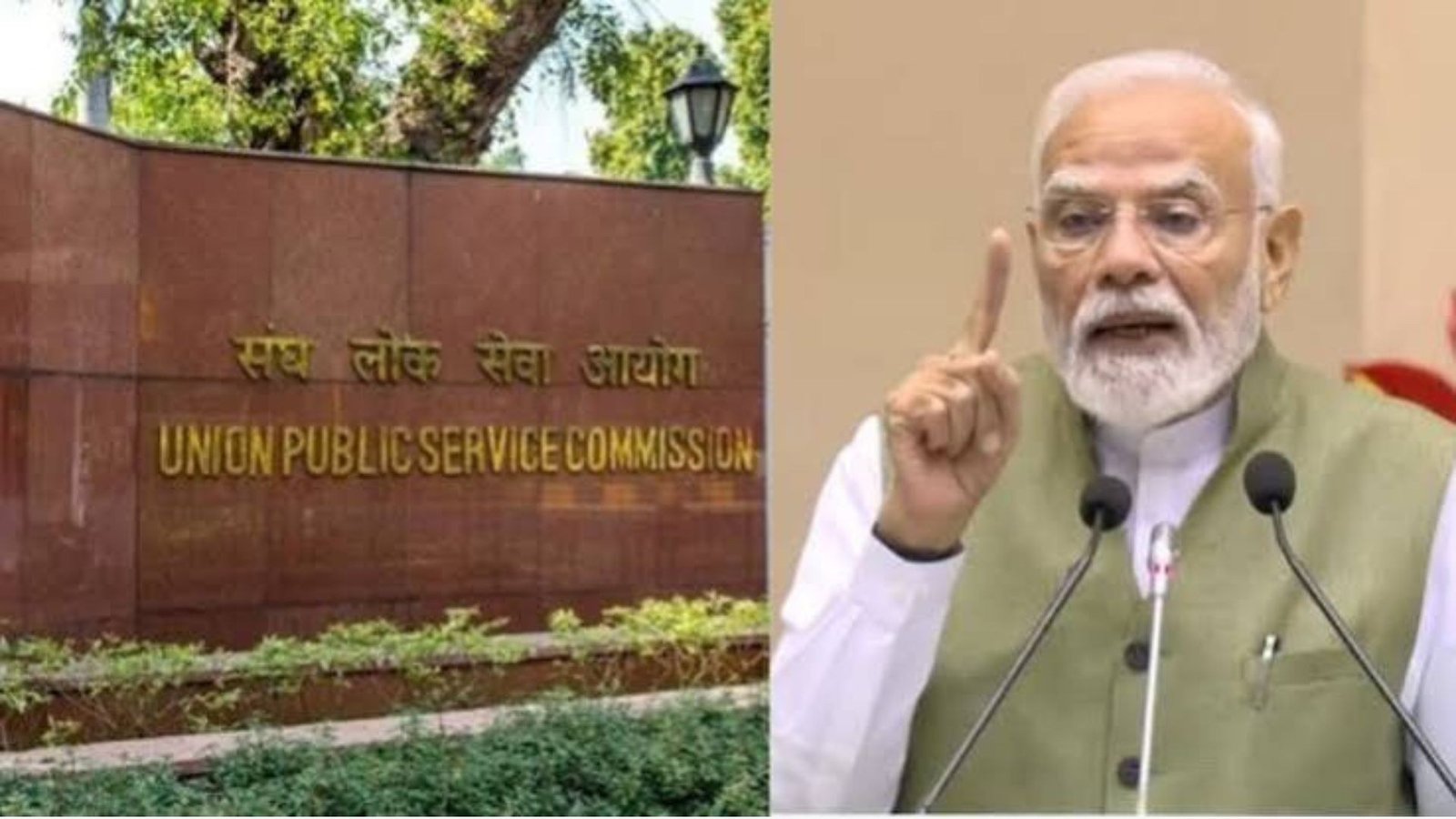
The Union Public Service Commission (UPSC) is marking 100 years of its institutional journey with discussions on how its examination system can evolve to assess candidates beyond memorised or predictable responses.

During the centenary programme, UPSC Chairman Ajay Kumar highlighted the importance of testing reasoning, spontaneous thinking and judgment in situations involving ambiguity. The focus, he said, should be on abilities that cannot be easily demonstrated through coached or standardised answers.
The two-day centenary programme, titled ‘Manthan’, is being held at Bharat Mandapam in New Delhi. The Commission's stated principles for its next phase include trust, transparency and technology, while retaining merit, fairness and equal opportunity as core principles.
UPSC is also expanding the use of technology in examinations. Digital e-admit cards and face authentication are among the measures being used to strengthen examination integrity. The Commission's official website currently lists face authentication as applicable to candidates appearing in UPSC examinations.
The centenary discussions also examined artificial intelligence, data analytics and digital systems in public administration. Other themes included recruitment from Tier-2 and Tier-3 cities, grassroots accountability and preparing the civil services for emerging challenges.
Established on October 1, 1926, the Public Service Commission later evolved into the Union Public Service Commission, a constitutional body responsible for major recruitment processes, including the Civil Services Examination.