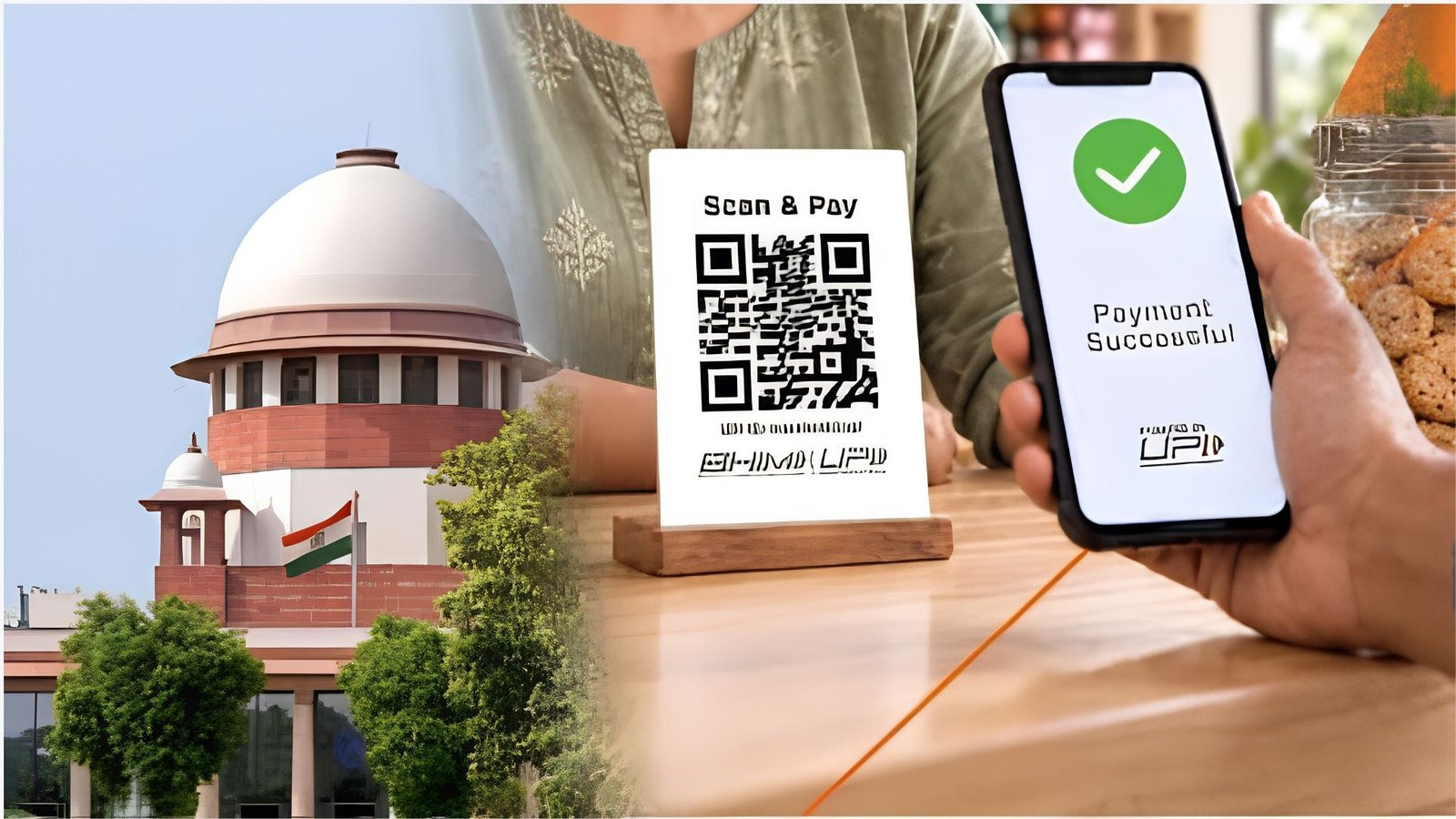
The Supreme Court has questioned the legal basis of the proposed 0.4% Merchant Discount Rate (MDR) on specified UPI transactions above ₹2,000, asking the government how the levy should be classified if it is neither a tax nor a fee.

A three-judge Bench headed by Chief Justice of India Surya Kant declined to grant an interim stay on the UPI MDR framework but issued notice to the Union government.
The Centre has proposed a 0.4% MDR on specified Person-to-Merchant (P2M) UPI transactions exceeding ₹2,000. The measure has raised questions over the nature and legal authority of the charge imposed on merchants.
The court has directed the Union government to file its counter affidavit within four weeks. The proceedings will therefore examine the legal basis of the charge rather than immediately suspending its implementation.
The National Payments Corporation of India (NPCI) introduced the 0.4% MDR framework from October 15, according to the details placed before the court.
The case could have implications for merchants, payment service providers and the broader UPI ecosystem, particularly as digital payments continue to account for a large share of retail transactions.
For now, the Supreme Court’s refusal to grant an interim stay means the MDR framework remains subject to the ongoing legal proceedings.