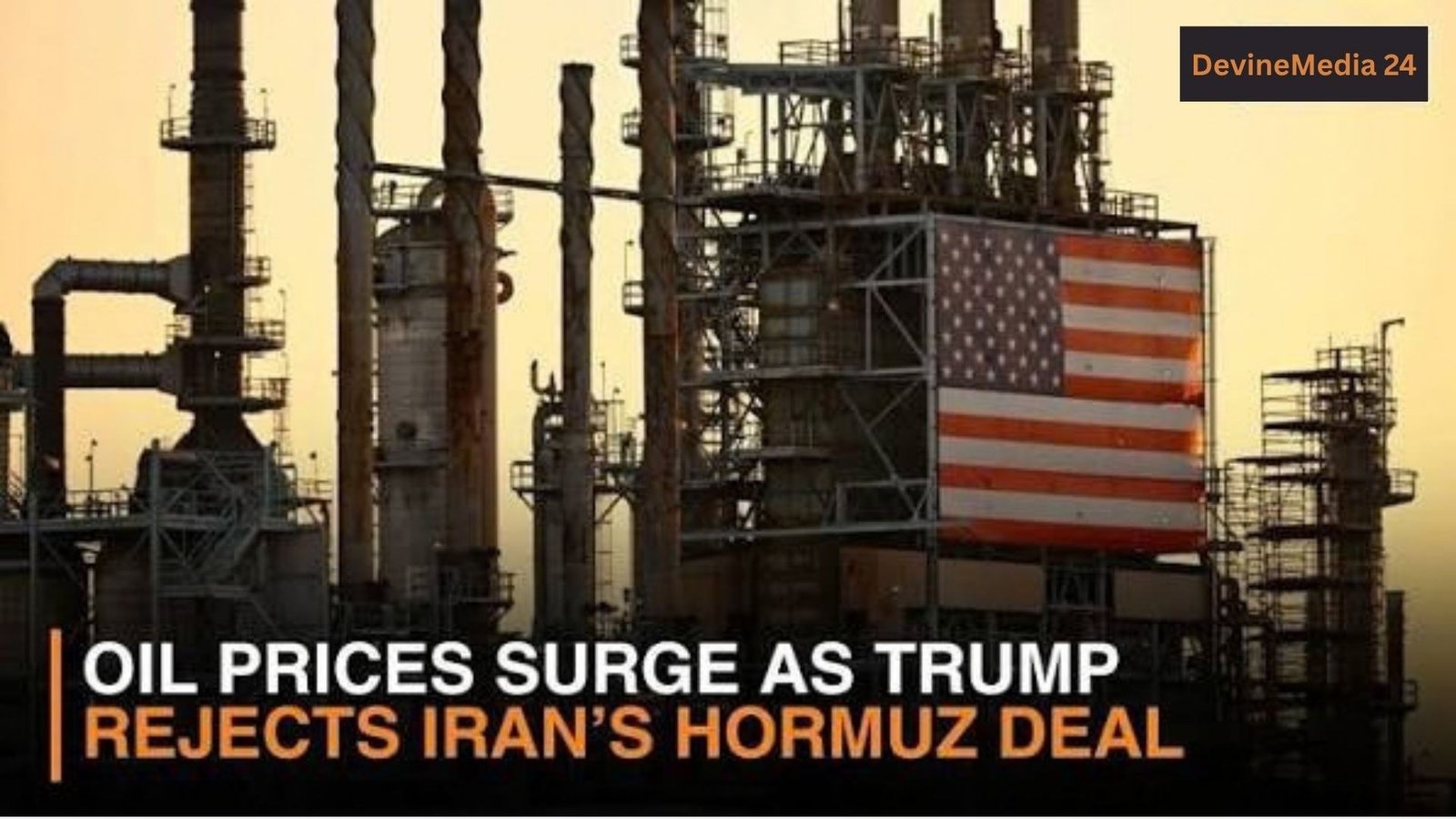
Oil prices jumped on Monday after US President Donald Trump rejected an Iranian proposal for a seven-day truce, raising fresh concerns about disruptions to global energy supplies.

The move also pushed bond yields higher as markets assessed the potential inflationary impact of prolonged tensions in the Middle East. Stocks traded mixed as investors awaited key US economic data.
Iran had proposed a temporary halt in hostilities during the UN General Assembly last week, with the plan linked to reopening the Strait of Hormuz. A reopening could help ease the supply disruption that has contributed to higher energy costs worldwide.
The Strait of Hormuz is a crucial route for global oil and gas shipments, making developments around the waterway closely watched by energy markets.
Despite the latest escalation, markets continue to price in some possibility that negotiations could eventually resume. Traders are therefore balancing the immediate risk of further supply disruption against hopes that the parties could return to discussions.
The uncertainty has broader implications for inflation, particularly if elevated energy prices persist. Higher oil costs can feed into transportation, manufacturing and consumer prices, complicating the outlook for central banks.
For now, oil markets remain highly sensitive to developments between Washington and Tehran, with any signs of renewed diplomacy likely to influence prices alongside the physical supply situation.