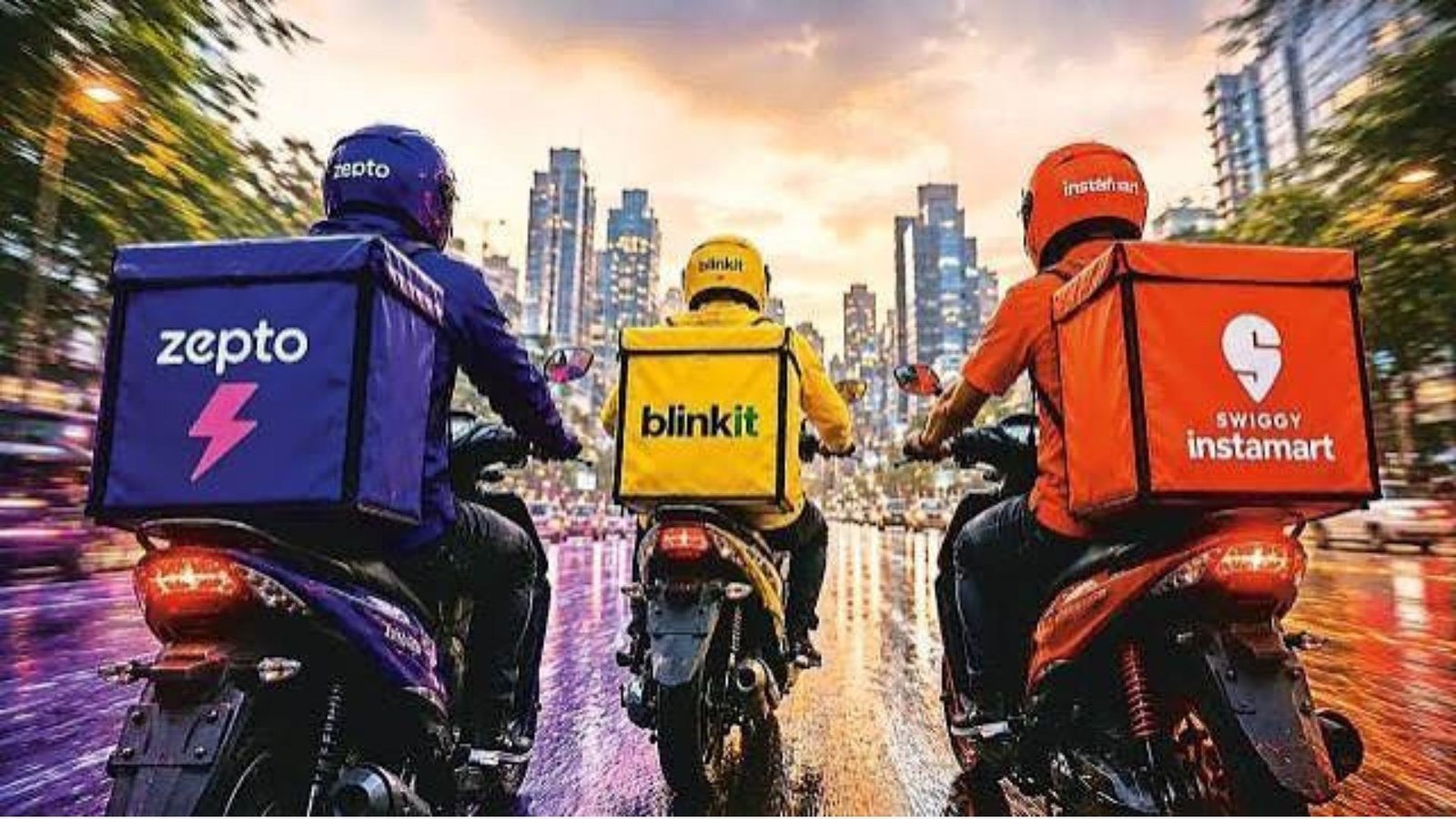
India’s quick-commerce sector is entering a new phase as companies shift their focus from rapid expansion and market share to profitability and sustainable unit economics.

The industry was initially driven by aggressive dark-store expansion, faster deliveries and customer acquisition. But as the market matures, the financial performance of each order is becoming increasingly important.
In Q1 FY27, Blinkit was the only major quick-commerce player to report positive adjusted EBITDA, with a margin of 0.6% and EBITDA of about ₹3 per order. Instamart was still recording a loss of around ₹68 per order, although its unit economics improved significantly over the previous year. Zepto’s EBITDA loss stood at nearly ₹60 per order in Q4 FY26.
The shift comes as competition continues to expand. Amazon has announced plans to invest $3 billion in Indian quick commerce by 2030, while Flipkart is also expanding its Minutes business. This brings larger e-commerce players into a market already led by Blinkit, Zepto and Instamart.
The sector’s scale remains substantial, but growth alone is no longer the only measure of performance. Dark-store productivity, order density, fulfilment costs, customer acquisition expenses and contribution margins are increasingly central to the business model.
For quick-commerce companies, the next stage will therefore depend on how effectively they convert growing order volumes into sustainable earnings.