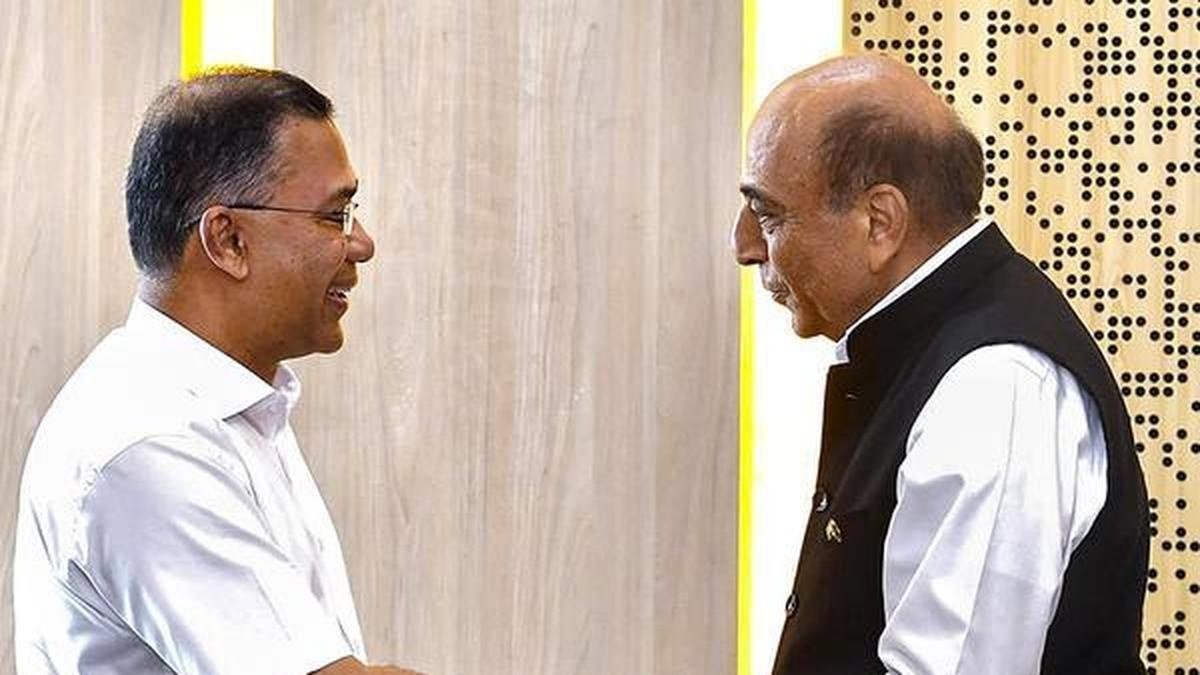
India’s High Commissioner to Bangladesh, Dinesh Trivedi, has stated that the extradition of Bangladesh’s deposed Prime Minister Sheikh Hasina could only take place through a “well‑structured legal process”, underscoring that due process is already in place.

Speaking at the Bay of Bengal Conversation, an annual conclave organised by the Centre for Governance Studies in Dhaka, Trivedi addressed Hasina’s presence in India following the fall of her government in July–August 2024. He noted that India had “hardly any choice” when Hasina sought refuge, as the decision was made after consultations among those governing Bangladesh at the time.
Hasina, who ruled Bangladesh for over a decade, was ousted amid political turmoil and has since remained in India. Her possible extradition has become a sensitive issue in Dhaka’s political discourse, with supporters demanding her safe return and opponents pressing for accountability.
Trivedi’s remarks highlight India’s cautious stance, balancing diplomatic relations with Bangladesh while adhering to international legal frameworks. Analysts say the statement signals that any move on extradition will require cooperation between both nations’ judicial systems, rather than unilateral political decisions.
The issue continues to dominate regional discussions, reflecting the complex interplay of law, politics, and diplomacy in South Asia.