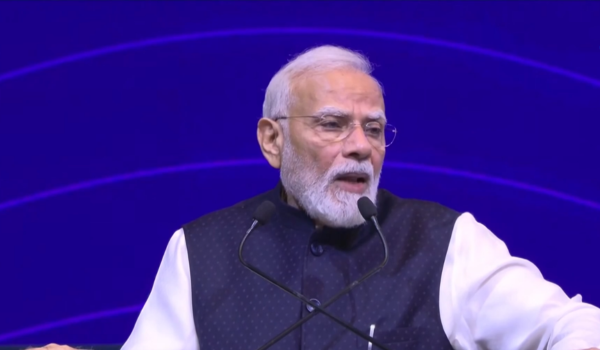
At the opening of SEMICON India 2026 in New Delhi, Prime Minister Narendra Modi made a clear pitch to international tech leaders: India is prepared to anchor the world’s next semiconductor supply chains. Speaking at Yashobhoomi before delegations from over 50 countries, Modi emphasized that global industry needs trusted, resilient partners—and India is ready to deliver.
The rapid rise of Artificial Intelligence is reshaping chip design. As Modi pointed out, modern fabrication is no longer just about shrinking transistor scale; it requires complete system-level integration, from dense memory packaging to thermal dissipation. India’s engineering base is uniquely placed to solve these architectural bottlenecks.
Backing this momentum, the government has scaled the India Semiconductor Mission (ISM) 2.0 to a $13.5 billion outlay, up from its initial $8 billion allocation. Electronics and IT Minister Ashwini Vaishnaw noted that policy now targets six critical pillars, backing 12 cleared projects and over 200 chip-design startups across materials, fabrication, and software integration.
Modi framed these investments against India’s strong macroeconomic indicators, citing a 7.8% GDP growth rate and recent sovereign rating upgrades as