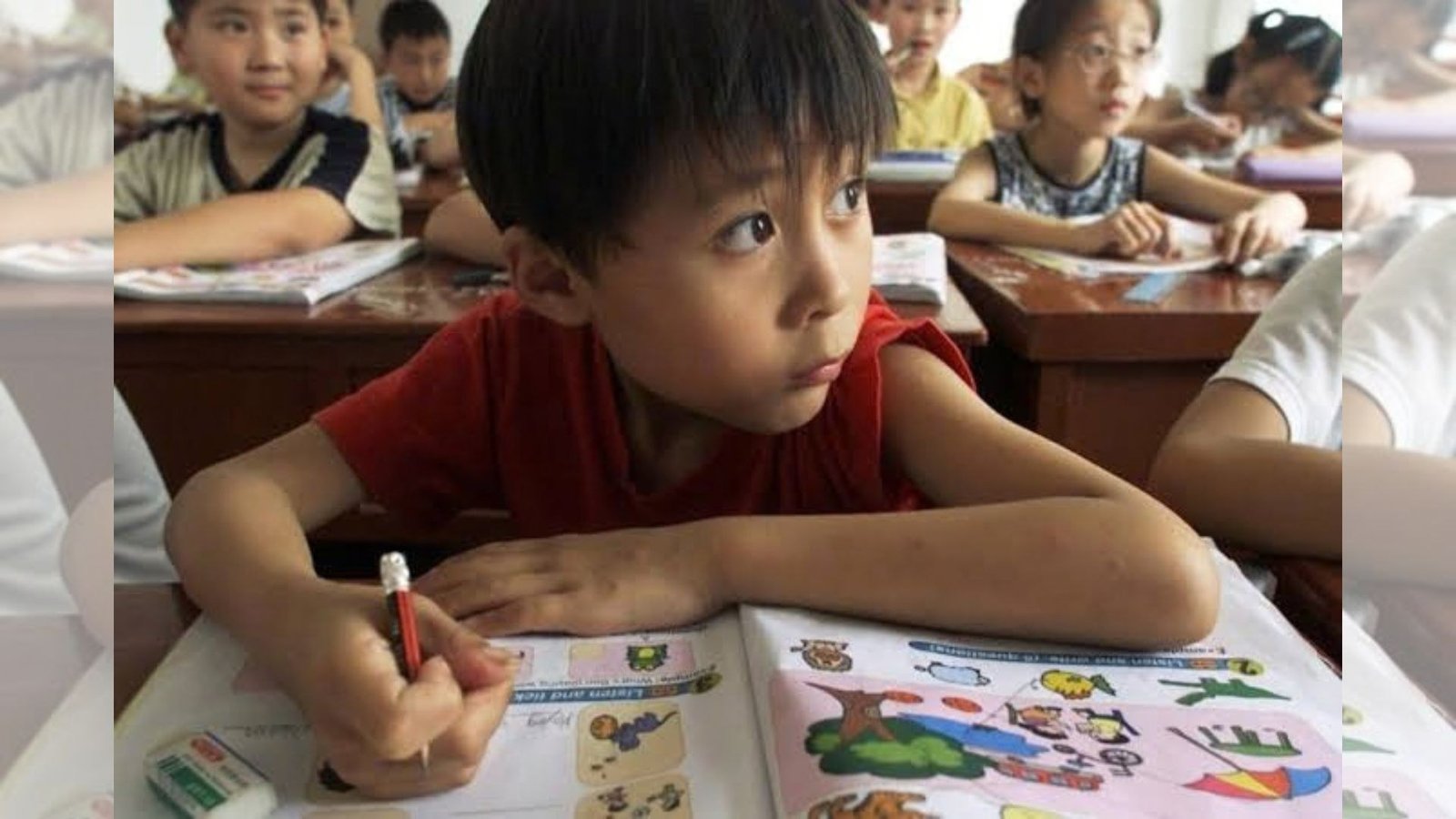
For decades, English played a central role in China’s education system, helping connect the country with the global economy and supporting opportunities for higher education, employment and social mobility.
That emphasis is now changing. Chinese schools are increasingly reducing the time and importance given to English instruction, reflecting broader changes in education policy and the country’s evolving economic and geopolitical priorities.
English lessons now receive less allocated classroom time than subjects such as physical education, mathematics and the Chinese language. The shift is part of a wider effort to strengthen domestic education priorities while addressing concerns over educational inequality.
English became particularly important after China began its reform and opening-up process in 1978. Proficiency in the language was widely associated with access to international knowledge, overseas education and better career opportunities.
The changing approach does not mean English has disappeared from Chinese schools. Instead, the language is becoming less dominant within the curriculum as policymakers place greater emphasis on physical development, Chinese cultural and linguistic education and core academic subjects.
The move also reflects changing attitudes toward the role of English in China’s future. As the country develops its own technological, economic and academic capabilities, policymakers are reassessing how much classroom time should be devoted to a foreign language.
For students and families, however, English remains relevant in many areas, particularly international higher education, business and global employment. The policy shift therefore represents a change in educational emphasis rather than the end of English learning in China.