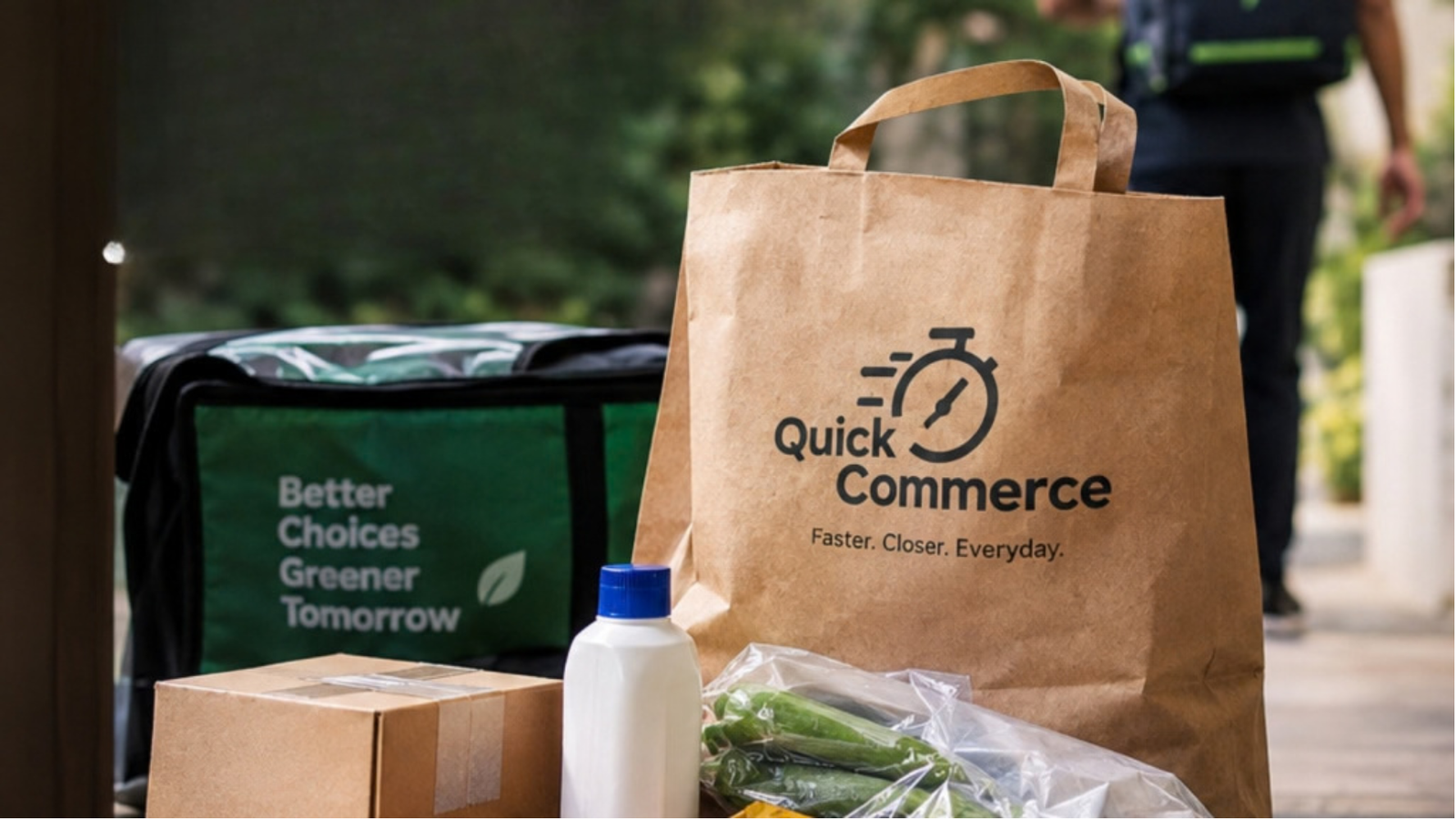
Quick-commerce has changed how Indians shop for everyday essentials. Groceries, toiletries, snacks and other products can now reach customers within minutes. However, the convenience of rapid delivery can also come with a less visible environmental cost: packaging waste.
Small orders may sometimes arrive wrapped in multiple layers of plastic bags, covers and other packaging materials. The amount of secondary packaging can appear disproportionate to the size of the purchase, particularly when only a few items are ordered.
This is linked to how quick-commerce businesses operate. Their systems are designed around speed, product protection, hygiene and standardised fulfilment. Packaging can help prevent damage, leakage and contamination while products move quickly from dark stores or warehouses to customers.
However, the growing volume of packaging creates a challenge for waste management. Reducing unnecessary material does not necessarily mean compromising hygiene or product safety. Companies can explore right-sized packaging, reusable delivery solutions and better segregation of recyclable materials to reduce waste.
Consumers can also play a role by combining purchases where practical, avoiding unnecessary orders and separating recyclable packaging from other household waste. Choosing products with less packaging can further reduce the amount of waste generated.
As quick-commerce continues to expand, the challenge will be finding a balance between delivery speed, convenience, product safety and environmental responsibility. Smarter packaging and more efficient consumption habits could help reduce the waste associated with India’s rapidly growing instant-delivery economy.
Lifestyle
How 10-Minute Deliveries Are Adding to India’s Waste Crisis
Quick-commerce is making daily shopping faster, but excess packaging from small orders is adding to India’s waste problem. Here’s how waste can be reduced.